
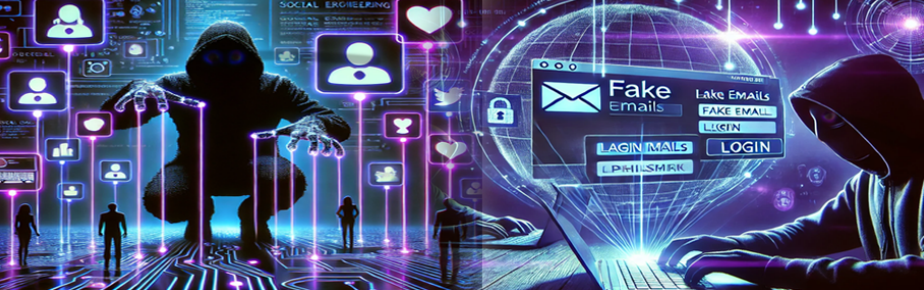
At its heart, social engineering is about exploiting human vulnerabilities rather than technical flaws. Hackers rely on manipulating emotions like fear, trust, curiosity, and urgency to trick victims into making poor decisions. Psychological manipulation can take many forms, from a fake email demanding immediate action to prevent account closure, to a phone call where an attacker pretends to be a trusted authority figure. The hacker is preying on the natural human response to stressful situations—people tend to act quickly when they feel something valuable is at risk.
- Fear: A victim might receive an urgent message claiming their bank account has been compromised, causing them to bypass normal security protocols out of fear of losing money or facing legal consequences.
- Curiosity: Hackers may invoke curiosity by sending emails with intriguing subject lines like “You’ve won a prize” or “Important document attached,” prompting a click on malicious links.
- Trust: Attackers impersonate trusted individuals or organizations (like an IT department or government agency) to lower the victim’s guard and extract sensitive information.
- Urgency: By creating a false sense of time pressure (e.g., an account will be locked in 24 hours), hackers reduce the likelihood of critical thinking.
By carefully exploiting these psychological triggers, hackers can bypass traditional security measures to access systems or sensitive information.
Common Social Engineering Techniques
- Phishing: This is the most common technique. Attackers pose as legitimate entities through emails containing malicious links or attachments that download malware or redirect victims to fake websites designed to steal credentials. For example, a 2021 campaign lured Microsoft users into clicking a fake “OneDrive” link, harvesting credentials and compromising corporate networks.
- Vishing: In voice phishing attacks, hackers use phone calls to impersonate legitimate companies or authorities, persuading victims to divulge sensitive information. The human voice adds a layer of authenticity, and attackers often use spoofed phone numbers. In 2022, scammers targeted a tech company by pretending to be IT staff to steal two-factor authentication codes.
- Video Phishing: This sophisticated form leverages video content, including deepfakes, to impersonate trusted figures urging immediate action. Hackers may also set up fake video conferencing calls or produce videos posing as reputable sources to prompt users to enter credentials on spoofed websites.
- Pretexting: Attackers create a believable scenario to build trust for exploitation over a longer period. An attacker might pose as an IT technician needing login credentials to “fix” a system upgrade, manipulating the target without raising suspicion.
- Baiting: Relying on curiosity or greed, hackers offer something enticing (e.g., free software or a USB drive labeled “Company Financials Q4” left in a parking lot) to lure victims into downloading malware.
The Human Element: Why Social Engineering Works
Social engineering exploits fundamental human emotions and behavioral tendencies.
- Desperation: Individuals facing job loss, financial difficulties, or personal crises are more susceptible to manipulation from cybercriminals presenting themselves as saviors.
- Greed: Many scams promise financial rewards or exclusive access, leading individuals to make hasty decisions that compromise their security.
- Reciprocity: When a hacker offers something helpful, victims often feel compelled to return the favor by sharing personal details.
- Familiarity: Communications appearing to come from known or trusted sources are more likely to be complied with without scrutiny.
How Hackers Use Social Media for Targeted Attacks
Posting personal information online gives hackers detailed insights into people’s lives.
- Creating Tailored Phishing Attempts: Hackers use details about recent trips or jobs to craft highly specific, legitimate-looking emails.
- Gathering Information for Security Questions: Attackers use social media to find answers to security questions (like a mother’s maiden name or a first pet) to bypass account recovery measures.
- Exploiting Life Events & Emotional Vulnerabilities: Hackers leverage public posts about breakups, financial struggles, or job changes to impersonate supportive friends or HR representatives and extract sensitive information.
- Spear Phishing & Social Connections: Hackers use a person’s interests and affiliations for highly personalized campaigns, or reach out through a mutual friend’s compromised account to establish trust.
Defending against Social Engineering
Defending requires a multifaceted approach:
- Education and Awareness Training: Regular training, including real-life examples and simulations, helps employees recognize potential red flags.
- Establish Clear Protocols: Organizations should implement strict protocols for sensitive information requests, such as verifying identities via callbacks or prohibiting the sharing of sensitive data via email or phone.
- Implement Multi-Factor Authentication (MFA): MFA adds an extra layer of security that can prevent unauthorized access even if a password is stolen.
- Regularly Update Security Protocols: Keep software, systems, and security patches up to date to defend against emerging threats.
- Encourage a Culture of Skepticism: Empower employees to question unusual requests in an open, non-punitive environment.
- Utilize Technology Solutions: Deploy email filters, anti-phishing tools, threat intelligence, and endpoint detection and response (EDR) systems.
- Security Audits & Simulated Attacks: Evaluate systems regularly and run phishing tests to identify weaknesses and refine training programs.
- Leverage Behavioral Analytics: Use tools to detect abnormal user behavior and flag potential attacks.
Social Media Safety: Do's and Don'ts to Outsmart Social Engineers
Do's:
- Use Strong Privacy Settings – Regularly review and update them to control who sees your posts.
- Limit Personal Sharing – Avoid posting sensitive info like locations, job changes, or financial updates.
- Verify Friend Requests – Only accept requests from people you know personally and verify unknown contacts.
- Be Cautious with Life Events – Share major events with a delay or in private groups.
- Report Suspicious Activity – Report and block strange accounts immediately.
- Monitor Your Mentions – Ensure hackers aren’t exploiting your identity.
Don'ts:
- Don’t Share Your Location – Check-ins and geotags expose your routines.
- Don’t Post Financial Updates – This can make you a target for scams.
- Don’t Discuss Relationship Issues Publicly – Hackers exploit personal struggles to build trust.
- Don’t Reuse Passwords – It makes all your accounts vulnerable if one gets hacked.
- Don’t Click on Suspicious Links – Verify legitimacy before clicking, even if it’s from someone you know.
- Don’t Post Security-Related Info – Avoid sharing details like a first pet’s name that answer security questions.