
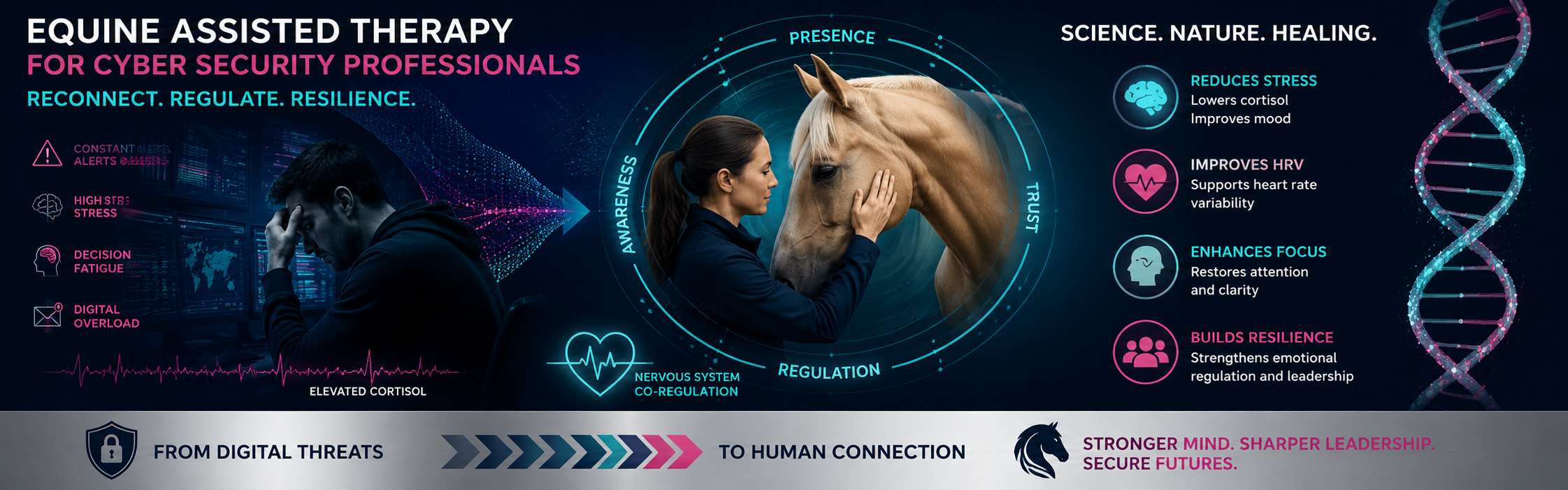
The Cybersecurity Environment: Chronic Invisible Stress
Cybersecurity professionals operate inside one of the most psychologically demanding environments in the modern workforce. Unlike many traditional occupations, cyber professionals function within a continuous landscape of invisible threats, constant vigilance, and high-stakes decision-making. Every alert, anomaly, phishing attempt, or system irregularity has the potential to escalate into a serious incident with financial, operational, or reputational consequences. This creates a workplace culture where hyper-awareness becomes normalized.
The pressure extends beyond technical complexity. Cybersecurity teams often work under relentless time constraints, manage overwhelming volumes of information, and make critical decisions with incomplete data. Many professionals are required to think like adversaries while simultaneously defending systems against increasingly sophisticated attacks. The result is a prolonged state of cognitive and emotional strain that can lead to burnout, emotional fatigue, decision fatigue, and chronic stress.
From a neurobiological perspective, this environment keeps the nervous system in a heightened state of activation. The body begins operating as though it is constantly under threat. Elevated cortisol levels, disrupted sleep patterns, reduced emotional regulation, and impaired cognitive recovery become increasingly common. Over time, the human body struggles to distinguish between real physical danger and the perpetual digital threat simulation that defines modern cyber work.
The Equine Environment: Regulated, Non-Verbal Safety Systems
In direct contrast to the cyber environment is the world of the horse. Horses exist within highly sensitive social systems based almost entirely on non-verbal communication, emotional awareness, and environmental regulation. As prey animals, horses are exceptionally attuned to subtle emotional shifts, body language, tension, and energy within those around them. They respond not to status, titles, or technical expertise, but to internal emotional congruence and nervous system stability.
This makes the equine environment uniquely therapeutic for individuals operating under chronic cognitive stress. Unlike human interaction, where emotional masking is common, horses respond honestly and immediately to emotional states. If a person is anxious, tense, disconnected, or emotionally dysregulated, the horse will often mirror that state through avoidance, alertness, or hesitation. Conversely, when a person becomes calm, grounded, and emotionally coherent, the horse responds with trust and connection.
Research into equine-assisted therapy has demonstrated measurable physiological and psychological benefits. Interactions with horses have been linked to reduced stress, improved emotional regulation, lower anxiety levels, and enhanced nervous system balance. Participants often experience improvements in heart rate variability, emotional awareness, and feelings of psychological safety after spending time in structured equine environments.
The Core Therapeutic Mechanism: Nervous System Recalibration
The true power of equine-assisted therapy lies not in the horse itself, but in the process of nervous system recalibration that occurs during interaction. Cybersecurity professionals spend much of their day operating within abstract digital spaces dominated by screens, alerts, and invisible threats. Equine work shifts attention away from virtual cognition and back into physical presence, sensory awareness, and embodied regulation.
The horse effectively acts as a living biofeedback system. Human stress, tension, uncertainty, or emotional incongruence immediately influences the interaction. This creates an opportunity for participants to become aware of internal states they may have ignored for months or even years. In many cases, cyber professionals become so accustomed to operating under stress that chronic activation feels normal. Horses disrupt this pattern by providing immediate, honest feedback that cannot be manipulated or intellectually bypassed.
As participants slow down, regulate breathing, soften posture, and become more emotionally present, the horse’s behaviour changes accordingly. This process teaches nervous system regulation experientially rather than intellectually. Instead of discussing stress management theoretically, individuals physically experience what calm regulation feels like within a safe relational dynamic.
Why Country Environments Amplify the Effect
The therapeutic impact of equine-assisted therapy is significantly enhanced by the rural and natural environments in which it typically occurs. Country settings provide a profound contrast to the overstimulated, technology-driven environments in which many cyber professionals spend most of their lives.
Modern digital workplaces are saturated with notifications, artificial lighting, constant multitasking, and fragmented attention. By comparison, rural environments introduce slower rhythms, natural sensory patterns, open spaces, fresh air, and environmental quiet. The nervous system responds strongly to this shift. Exposure to nature has consistently been associated with reduced cortisol levels, improved cognitive recovery, enhanced attention restoration, and increased parasympathetic nervous system activation.
The quiet rhythm of a farm or equestrian environment also encourages psychological decompression. Instead of reacting to incoming threats and rapid decision cycles, individuals are invited into a slower, grounded pace of interaction. Walking through fields, hearing natural sounds, observing herd behaviour, and engaging physically with animals creates an experience of sensory coherence that is largely absent in digital workspaces.
When combined with equine interaction, the rural environment becomes more than scenery. It becomes part of the therapeutic architecture itself, helping to restore balance between the cognitive demands of modern cyber work and the biological needs of the human nervous system.
Why Cybersecurity Professionals Specifically Benefit
Cybersecurity professionals are uniquely positioned to benefit from equine-assisted interventions because of the specific psychological demands associated with their work. One of the most significant challenges in cyber environments is the imbalance between intense cognitive stress and minimal physical discharge. The body accumulates stress physiologically, but there are few natural outlets for releasing it.
Equine-assisted therapy introduces movement, breath awareness, grounding, and physical presence back into the stress cycle. Activities such as grooming, leading, observing, and working alongside horses require individuals to slow down and become aware of their bodies again. This helps counteract the dissociation and mental overactivation common in highly technical professions.
Another important factor is hyper-vigilance. In cybersecurity, constant scanning for threats is professionally valuable, but over time it can become psychologically damaging when carried into everyday life. Horses only respond to the present moment. They do not engage with hypothetical future threats or abstract digital concerns. This naturally encourages participants to return their focus to immediate sensory experience rather than persistent anticipatory thinking.
Equine work also provides powerful leadership insights. Horses respond poorly to aggression, inconsistency, or emotional instability. They require calm authority, clarity, trust, and emotional congruence. For cybersecurity leaders managing incident response teams, high-pressure operations, or crisis communication, these relational dynamics become highly transferable to workplace leadership and decision-making environments.
Psychological Mechanisms at Work
Equine-assisted therapy engages several psychological and physiological mechanisms simultaneously. One of the most important is emotional externalization. Many individuals struggle to recognize or articulate their internal emotional state. Horses often make these hidden dynamics visible through their reactions, creating opportunities for increased self-awareness.
The therapy also strengthens interoception, which refers to awareness of internal bodily sensations such as breathing, heart rate, tension, and stress responses. Cybersecurity professionals frequently become disconnected from these internal signals due to prolonged cognitive immersion. Re-establishing this awareness is essential for long-term emotional regulation and resilience.
Trust and attachment dynamics also emerge within equine interaction. Horses respond consistently and honestly, which reinforces emotionally safe relational patterns. Participants learn that calmness, consistency, and authenticity create trust, while emotional volatility disrupts connection. This becomes especially important for individuals operating within high-stress environments where emotional suppression and performance masking are common.
Perhaps most importantly, equine therapy slows cognitive processing. The fast-paced mental state required in cybersecurity rarely allows for emotional recovery or reflective processing. Horses force individuals to become patient, intentional, and fully present in the moment.
Practical Program Design for Cybersecurity Teams
An effective equine-assisted wellness program for cybersecurity professionals should be carefully structured to align with the realities of high-stress technical work. The process should begin with decompression and environmental transition. Participants should disconnect from technology and spend time simply observing the environment and herd dynamics before engaging directly with horses.
From there, non-verbal interaction becomes central. Grooming, walking, leading, and observing horses allows participants to experience immediate relational feedback without relying on verbal communication or intellectual analysis. Facilitators can help participants connect their experiences with workplace behaviours, stress patterns, leadership tendencies, and emotional regulation strategies.
Controlled challenge exercises can then introduce mild pressure scenarios that require calm problem-solving and emotional regulation. These activities often reveal how individuals respond under stress and create opportunities for healthier behavioural patterns to emerge.
Finally, structured reflection sessions allow participants to integrate insights into professional environments such as incident response, team communication, executive leadership, and burnout prevention strategies.
Strategic Insight: More Than Relaxation Therapy
Equine-assisted therapy should not be viewed simply as relaxation or recreational wellness. For cybersecurity professionals, it functions more accurately as a form of neuro-regulatory training designed for high-threat cognitive environments.
The intervention directly targets many of the psychological consequences associated with modern cyber operations, including chronic hyper-vigilance, burnout, emotional fatigue, cognitive rigidity, and impaired stress recovery. By reconnecting individuals with embodied awareness, relational regulation, and environmental calm, equine-assisted therapy helps restore capacities that prolonged digital exposure gradually erodes.
In this sense, the horse becomes less of a therapy tool and more of a biological mirror reflecting the state of the nervous system itself.
Important Limitations and Organisational Responsibility
While equine-assisted therapy offers significant benefits, it is not a substitute for organizational reform. Burnout in cybersecurity is often driven by systemic issues including understaffing, unrealistic workloads, continuous availability expectations, and poor operational design.
No wellness intervention can fully compensate for environments that chronically overload human capacity. Equine-assisted programs are most effective when integrated into broader resilience strategies that include healthy shift structures, leadership support, psychological safety, workload management, and sustainable operational practices.
Organizations must therefore view these interventions not as isolated solutions, but as part of a comprehensive approach to human sustainability in high-risk digital professions.
Conclusion: Reconnecting Humans in a Digital Threat World
Cybersecurity professionals operate within invisible landscapes of abstract digital danger, often spending years in a sustained state of mental and physiological alertness. Over time, this disconnects individuals from the natural rhythms of the body, the environment, and authentic human regulation.
Equine-assisted therapy offers a powerful counterbalance. Through interaction with horses and immersion in natural environments, individuals are invited back into presence, embodiment, emotional awareness, and nervous system coherence. The quiet honesty of the horse, combined with the restorative qualities of the countryside, creates an experience that modern digital environments rarely provide.
In a world increasingly dominated by artificial systems, equine-assisted therapy reminds us that resilience is ultimately biological, relational, and deeply human.
By Laurie James